Workplace Wellbeing Is What the Working Day Allows
I was speaking with someone recently about why they struggle to drink enough water when they’re at work. It wasn’t because they didn’t understand the importance of hydration or forgot to bring a water bottle, and they didn’t need an app to remind them to drink.
They had learned to limit how much they drank because drinking meant needing to go to the bathroom and going to the bathroom meant interrupting their concentration.
The problem wasn’t the bathroom break itself. It was the feeling that if they broke their flow too often, they wouldn’t get through everything they needed to do.
And that made me realise that sometimes hydration isn’t a water-bottle problem, it’s a workplace workload problem.
When “take care of yourself” becomes another instruction
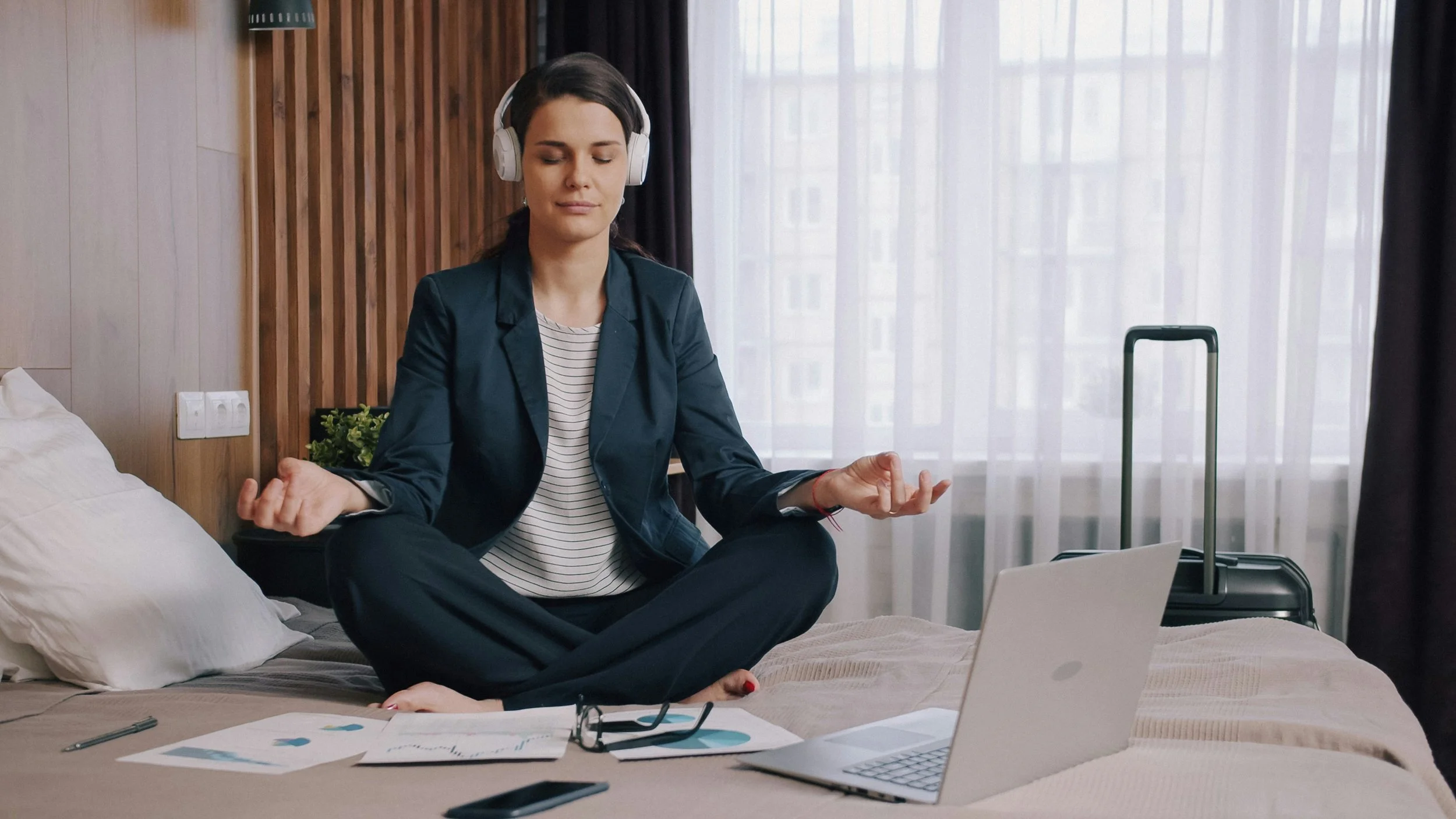
I have seen versions of this play out in plenty of workplaces. The pressure is on. Perhaps there is a regulatory deadline, a major transformation, a system implementation, an organisational restructure or an external event that nobody could have reasonably predicted. People are asked to dig deep.
Leaders acknowledge that the work is demanding. They express genuine appreciation for the additional effort and remind everyone to do what they need to do to take care of themselves. Then, collectively, everybody puts their head down and their tail up.
Lunch is eaten at the desk or not eaten at all. Meetings are booked over lunch hours or the small gaps that remain in the calendar. People start earlier, finish later and keep an increasingly watchful eye on their messages after hours.
We see someone deciding not to stop for coffee because they are finally making progress, while someone else ignores the need to go to the bathroom because the workshop is running behind. Another person abandons the walk they had planned at lunchtime because there is just one more thing to finish.
Everyone assumes it will only be for a little while. But the deadline moves, another urgent priority arrives, or the next phase begins before anyone has recovered from the last one.
Temporary extra effort quietly becomes the way work is done.
Going harder does not always get us there faster
There are times when a team needs to lift its effort for a short, clearly defined period. Most of us understand that. We may even enjoy the sense of purpose and camaraderie that comes from working together through something difficult. Many of my close friendships were forged in the fires of program discovery, design, development, delivery and dependency. The trouble begins when intensity is mistaken for effectiveness.
Humans are not designed for continuous, uninterrupted cognitive effort. Concentration fluctuates, decision-making becomes more effortful, patience shortens and creativity narrows. We become more likely to miss details, repeat work, communicate poorly and solve the wrong problem very efficiently. We’ve all been there, right?
The hours may continue to accumulate while the quality of the output begins to decline.
A ten-minute break to get a coffee and speak to a colleague can look unproductive when every minute feels precious. But that short conversation, whether it is about work or not, may be exactly what allows the brain to step away from the problem, reset and return with greater clarity.
The same applies to eating lunch away from the screen, walking outside, drinking enough water or finishing work at a reasonable time. These are not indulgences that compete with performance. They are part of the physiology that makes sustained performance possible.
Some brains feel the interruption more acutely

This can be particularly complicated for people who rely heavily on periods of deep focus.
We are seeing more midlife women recognising or being diagnosed with ADHD, sometimes after decades of finding their own ways to compensate. For some, getting into focused work takes considerable effort, and interruptions or repeated context-switching can make it difficult to find that thread again. Once they are locked in, stepping away can feel counterproductive, even when they are hungry, thirsty or need a break.
But this is not only an ADHD issue. Many people working in complex, cognitively demanding roles recognise the feeling of finally getting traction and being reluctant to interrupt it.
The answer is not to pretend every person should work in exactly the same way or take identical breaks at prescribed times. It is to create working conditions that recognise sustained attention as a finite resource and give people more control over how they manage it.
The culture we create and the culture that evolves
Most organisations do not consciously set out to create a culture in which people cannot stop for lunch. Their values may genuinely support flexibility, wellbeing and psychological safety. Their leaders may sincerely care about the people who work for them. But there is often a difference between the culture an organisation intends to create and the culture that evolves under pressure.
A culture evolves through what people repeatedly see, experience and feel rewarded for. If senior leaders routinely send messages late at night, people notice. If the person who skips lunch is praised for commitment while the person who protects their break is treated as less available, people notice.
If calendars are permanently full, meetings consistently run over and every request is described as urgent, people adapt. And if someone takes leave but remains visibly responsive throughout it, that also communicates something about what being away from work really means.
None of these behaviours needs to be written into a policy to become part of the culture. That is why a healthy workplace cannot be created through good intentions alone. It requires conscious and repeated action, particularly when the pressure is on.
Permission has to be real
It is not enough to tell people they are allowed to take a break if the workload makes doing so feel impossible, nor is it enough to promote flexible work if those using the flexibility quietly lose access to opportunities. It is not enough to encourage boundaries if the person setting one is expected to repeatedly justify it, and it is not enough to tell exhausted people to practise self-care while leaving the conditions that are exhausting them untouched.
Real permission is visible in workload, priorities, deadlines, meeting practices and leadership behaviour.
It may mean deciding what won’t be done, rather than asking people to fit recovery around an unchanged volume of work. It may mean protecting periods without meetings, reviewing what is genuinely urgent or making it normal for someone to say they do not have the capacity to absorb another task without renegotiating something else.
Sometimes it means leaders taking lunch, using their leave, logging off and resisting the temptation to send the message they have just told everyone else can wait until tomorrow.
We may also need to relearn how to take the space
Environment matters enormously, but it is not the whole story. After years of operating in high-pressure environments, people carry work habits with them.
They may move into a new workplace where nobody expects them to answer messages after hours, yet they still check compulsively. They may have an hour for lunch but continue to eat at their desk. They may have permission to walk away but still feel anxious when they do.
The external pressure may have changed, but the internalised expectations remain. That is where personal boundaries and conscious practice matter.
Sometimes we need to relearn that going to the bathroom is not an unacceptable interruption. That lunch does not have to be earned. That a short conversation with a colleague is not wasted time. That finishing at the agreed time does not mean we lack commitment.
A supportive environment gives us room to practise these things. It cannot always undo years of conditioning immediately.
This is why workplace wellbeing sits at the intersection of the person and the system. Organisations need to create conditions that make healthy behaviour possible, and individuals may need support to recognise and use the space available to them. Neither side can do the whole job alone.
What is left at the end of the week?
One of the clearest signs of a healthier working rhythm is not simply that people continue to meet their deadlines. It is that they have something left when the work is done.
Enough energy to spend time with friends, to cook dinner without resentment, to move their body, to have a conversation with their family or to participate in the parts of life that make the work worthwhile.
A workplace can have excellent wellbeing policies, generous benefits and beautifully worded values. But the lived culture is revealed by what an ordinary working day allows and by what remains of its people at the end of it.
Workplace wellbeing is not what is written on the wall. It is whether people can drink the water, take the lunch break, step away from the keyboard and still get home with some part of themselves intact.