The Wellness Industrial Complex: When Living Well Becomes Something We Have to Buy
I was listening to a podcast recently when I heard a phrase that stopped me in my tracks:
The wellness industrial complex.
I had to look it up immediately.
It is a play on the “military-industrial complex”, a term popularised by US President Dwight D. Eisenhower to describe the powerful relationship between government, military interests and the industries that benefited from them.
The wellness version describes something rather different, but the underlying idea felt uncomfortably familiar: a vast commercial system that creates, magnifies or repackages problems, then offers us the product that will supposedly solve them.
Or, as I have been known to call some of it, wellness wankery.
First, convince us there is a problem
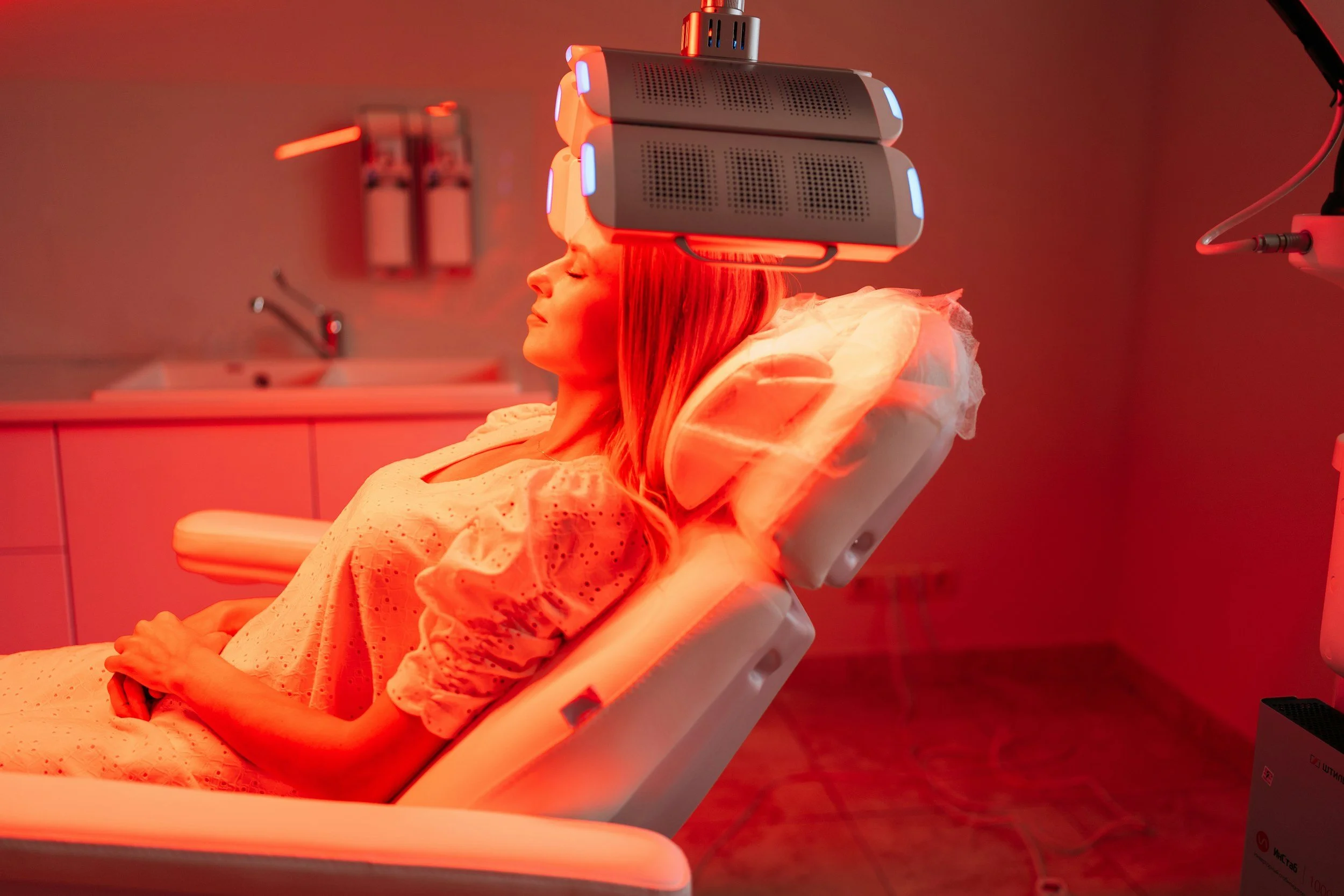
The wellness industrial complex is not simply the wellness industry. There is nothing inherently wrong with paying for a useful service, appropriate professional advice or something that genuinely supports your health.
The problem is the machinery surrounding it.
It convinces us that we are deficient, inflamed, toxic, hormonally broken, ageing badly or failing to optimise ourselves. It takes legitimate concerns about our health and quietly turns them into anxiety.
Then, conveniently, it offers us the answer.
A supplement. A device. A detox. An app. A complicated morning routine. Special goggles. An expensive recovery membership. A purple powder containing an ingredient we had never heard of until an influencer explained that our future depended on it.
There is always another problem to discover and another level of wellness to reach.
Why it works so well
People are not foolish for responding to this.
Many are tired, time-poor or experiencing symptoms that have never been properly investigated or explained. They may feel dismissed by healthcare, confused by conflicting advice or frightened about what ageing will mean for them.
A product offers hope. It gives us something concrete to do and, for a while, the feeling that we are taking back control.
Social media then turns one moment of curiosity into a barrage of answers to questions we had not previously thought to ask.
We are social creatures. We are wired to learn from other people and take cues from our community. But our community is no longer limited to the people around us. It now includes thousands of strangers, curated lives, paid partnerships and algorithms that know exactly which insecurity kept us watching.
Somewhere in all that noise, it becomes difficult to distinguish what our body is actually telling us from what the marketing tells us must be wrong.

The foundations have not changed
There may be a place for supplements, testing, technology and particular therapies. I use some of them in my own life and clinical work.
But their usefulness depends on context.
There is little point investing in the latest anti-ageing supplement if you are undernourished, sleeping poorly, barely seeing daylight and your digestion is not working well enough to absorb what you are taking.
A supplement can supplement. It cannot replace the conditions our biology requires.
Food. Light. Movement. Sleep. Fresh air. Recovery. Human connection. Moments of quiet. Rhythms that allow the body to anticipate what is coming next.
None of these is particularly new or sexy. Most cannot be patented, branded or turned into an impressive unboxing video.
But they remain the foundations upon which everything else depends.
A question worth asking
This is not an argument against spending money on your health. It is an invitation to pause before assuming the next product, protocol or health trend is something you need.
Ask yourself:
Did I know I had this problem before somebody tried to sell me the solution?
Because wellness should not require us to remain perpetually dissatisfied with ourselves.
And living well was never meant to become another full-time job.
Next time, I want to explore the question underneath all of this: when we say we want more energy, better sleep, a different body or a longer life, what are we actually hoping those things will make possible?
About the author
Mary-Leigh Scheerhoorn is a Nutritional Medicine Practitioner, Health Strategist and founder of Genesis Health & Lifestyle Solutions. Her work sits at the intersection of biology, behaviour and real life, brought together through GENESIS, her systems-based approach to the art and science of living well.